How Long Does a Tarmac Driveway Last? Everything You Need to Know
If you’re considering having a new tarmac driveway installed, one of the first questions you’re likely to ask is: how long will it last?
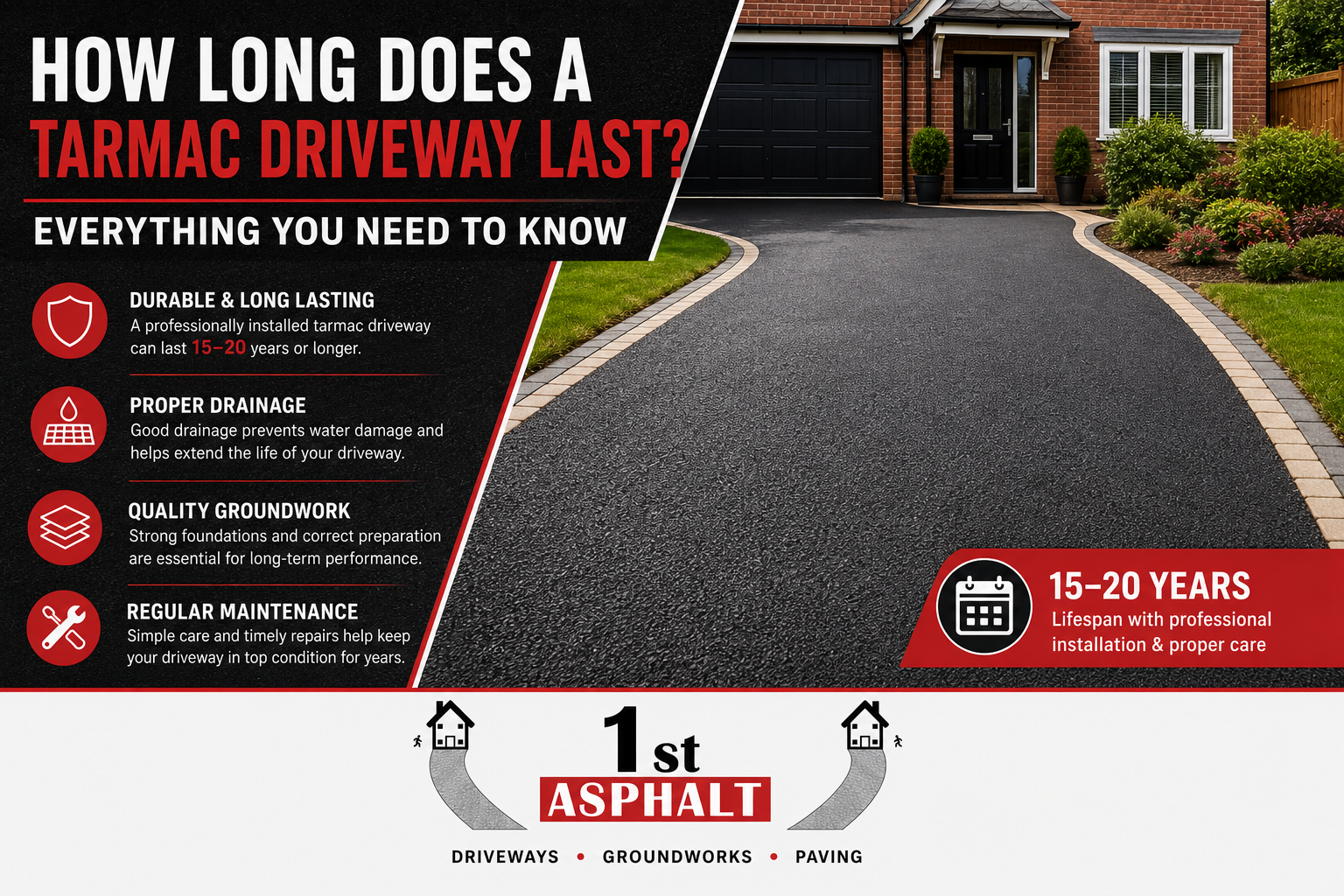
A professionally installed tarmac driveway can typically last 15–20 years or longer, depending on the quality of the installation, the groundwork underneath it, the amount of traffic it receives and how well it is maintained.
At 1st Asphalt, we provide professional tarmac driveway and groundwork services throughout Birmingham and the surrounding areas. In this guide, we’ll explain what affects the lifespan of a tarmac driveway and what you can do to keep yours in excellent condition for as long as possible.
How Long Does a Tarmac Driveway Typically Last?
A well-installed and properly maintained tarmac driveway can provide many years of reliable use.
However, there isn’t one exact lifespan that applies to every driveway. A residential driveway used by one or two vehicles will experience very different levels of wear compared with a larger driveway or commercial surface that receives constant traffic.
The quality of the original installation is also extremely important. Proper excavation, a strong sub-base, effective drainage and professional laying all contribute to the long-term performance of the finished surface.
What Affects the Lifespan of a Tarmac Driveway?
Several factors determine how long your driveway will remain in good condition.
1. Quality of the Groundwork
The surface you see is only part of a tarmac driveway.
A properly prepared foundation underneath the tarmac is essential. If the ground isn’t excavated and compacted correctly, movement underneath the surface can eventually lead to sinking, cracking and uneven areas.
This is why professional groundwork is such an important part of any driveway installation.
2. Drainage
Water can cause significant problems for poorly designed driveways.
Effective drainage helps prevent water from collecting on the surface or penetrating areas where it could affect the foundations underneath.
A professional driveway installer should consider drainage requirements before laying the final surface.
3. Vehicle Traffic
The number and type of vehicles using your driveway will naturally affect its lifespan.
Standard residential driveways are designed to accommodate everyday cars and vans, but frequent use by significantly heavier vehicles can place additional pressure on the surface and foundations.
If heavier vehicles will regularly use the area, this should be considered during the groundwork and construction process.
4. Weather Conditions
British weather means driveways have to deal with rain, temperature changes, frost and occasional periods of extreme heat.
Over many years, repeated changes in temperature can contribute to general wear. A correctly installed surface and good drainage can help reduce the impact of these conditions.
5. Maintenance
One of the advantages of tarmac is that it is relatively easy to maintain.
Keeping the surface clean, removing weeds around the edges and dealing with small areas of damage before they become larger problems can help extend the life of your driveway.
How Can You Make a Tarmac Driveway Last Longer?
There are several simple ways to protect your driveway.
Keep it clean: Regularly remove leaves, dirt and debris to prevent organic material from building up.
Deal with damage early: Small cracks or damaged areas are usually easier to repair before they become more significant.
Avoid unnecessary heavy loads: Unless the driveway has been designed for them, regularly parking extremely heavy vehicles on the surface may increase wear.
Keep drainage clear: Make sure drainage channels and surrounding areas remain clear so that rainwater can drain away effectively.
Use a professional installer: Ultimately, the lifespan of your driveway begins with how well it is installed.
When Should a Tarmac Driveway Be Repaired?
Not every sign of wear means that your entire driveway needs replacing.
Minor cracking, small damaged sections or isolated areas of deterioration may be repairable, particularly when identified early.
Signs that your driveway may need attention include:
- Cracks appearing across the surface
- Potholes or broken sections
- Areas beginning to sink
- Water regularly pooling on the driveway
- Loose or deteriorating edges
- Significant surface wear
Having these issues assessed early can help determine whether a repair, resurfacing or complete replacement is the most appropriate solution.
Can an Existing Tarmac Driveway Be Resurfaced?
In some situations, yes.
If the foundations of an existing driveway remain strong and stable, it may be possible to resurface the area rather than completely remove and rebuild it.
However, resurfacing isn’t suitable for every driveway. If there are significant problems with the sub-base, drainage or movement underneath the surface, simply covering the existing tarmac may not solve the underlying issue.
A professional assessment is the best way to determine the right approach.
Is Tarmac a Good Choice for a Driveway?
For many Birmingham homeowners, tarmac remains an excellent driveway material.
It’s particularly well suited to properties where durability, practicality and relatively low maintenance are priorities.
Some of the main benefits include:
- Strong and hard-wearing
- Suitable for regular vehicle use
- Smart, clean appearance
- Relatively low maintenance
- Excellent for larger driveway areas
- Can be combined with decorative borders and edging
- Long lifespan when professionally installed
The finished result can also be customised with block paving borders, edging and other landscaping features to complement the appearance of your property.
Professional Tarmac Driveways in Birmingham
The lifespan of your tarmac driveway depends heavily on what’s underneath it.
At 1st Asphalt, we understand the importance of proper preparation, drainage and groundwork before the final surface is installed. We provide professional tarmac driveways, paving and groundwork services across Birmingham and the surrounding areas.
Whether your existing driveway needs attention or you’re considering installing a completely new driveway, our team can assess the area and recommend the most suitable solution.
Contact 1st Asphalt today for a free, no-obligation quotation for your new tarmac driveway.